
Technology / AI initiatives succeed when they begin with a clear operational problem rather than a vague request to “add AI.” Teams should identify the decision, workflow, or service they want to improve; define who owns it; document the systems that supply data; and agree on the outcome that will demonstrate value. This approach turns an AI project into a managed business and engineering programme instead of an isolated experiment.
A useful first step is to map the current environment: users, applications, integrations, devices, data stores, network paths, approval points, and failure dependencies. Visual documentation helps stakeholders test assumptions before implementation. For teams that need a starting point for architecture discussions, Blueprintly-ის ხელოვნური ინტელექტით შექმნილი სისტემური დიაგრამები can be included in the discovery workflow as a reference point for creating and reviewing system diagrams. Pour approfondir le sujet, consultez également notre dossier sur XTREME HD bewerten.
AI governance should be designed from the beginning. The NIST AI Risk Management Framework organizes AI risk work around governing, mapping, measuring, and managing risks. It provides a practical structure for assigning accountability, examining context, testing impacts, and monitoring a system over time.
How to evaluate and structure your Blueprintly Tech approach
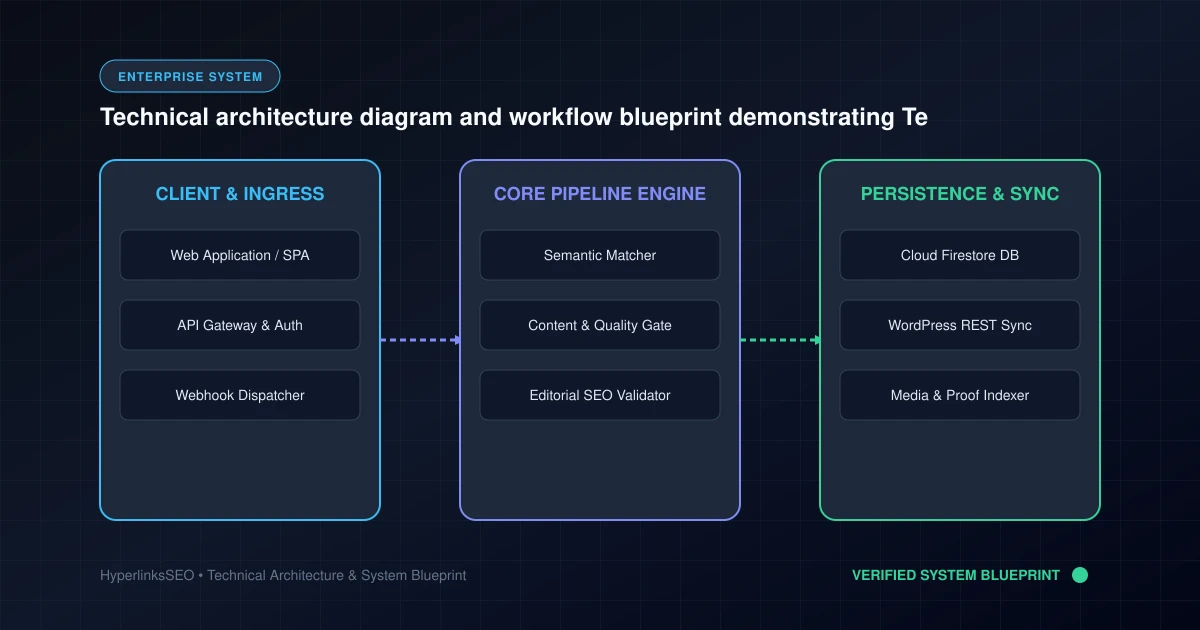
Start with a short, decision-ready charter. It should state the business problem, intended users, process owner, proposed technology boundary, data categories, success measures, budget constraints, and acceptance criteria. Avoid beginning with a model selection exercise. A model is only one component of a broader system that includes data pipelines, access controls, interfaces, human review, monitoring, and incident handling. Pour approfondir le sujet, consultez également notre dossier sur IPTV Kaufen fuer mehrere Geraete Smart TV, Fire Stick und Android TV.
1. Define one measurable use case
Choose a use case with a visible baseline. Examples include reducing the time required to route service requests, improving the completeness of technical documentation, or helping analysts prioritize known categories of alerts. State the current process, the pain point, the expected change, and the person who can approve whether the outcome is useful.
- Input: Identify data sources, formats, owners, retention limits, and data-quality concerns.
- Decision: Specify whether the system recommends, drafts, classifies, predicts, or automates an action.
- Human role: Define who reviews output, who can override it, and when escalation is mandatory.
- Boundary: List systems and actions that remain out of scope during the first release.
- Evidence: Decide which logs, test results, and approvals are required before deployment.
This structure helps prevent scope drift. It also makes it easier to compare a pilot against the existing process, rather than judging it through general impressions. Pour approfondir le sujet, consultez également notre dossier sur IPTV Kaufen mit Support Hilfe bei App und Aktivierung.
2. Build an architecture and dependency map
Create a diagram that separates people, business processes, applications, APIs, identity services, data platforms, cloud services, endpoints, and network zones. Mark trust boundaries and note which interfaces exchange sensitive or operationally important data. The CISA Secure by Design guidance emphasizes building security considerations into products and systems rather than treating them as a later add-on.
The map should answer simple operational questions: What happens if an identity provider is unavailable? Which equipment can communicate with the AI service? Where is output stored? Which system is the source of record? How can an administrator disable an integration? These answers are more valuable than a visually complex diagram that does not show ownership or data flow. Pour approfondir le sujet, consultez également notre dossier sur IPTV Kaufen nach Preis.
3. Establish a staged delivery plan
Use gated stages: discovery, design, controlled pilot, security review, limited production release, and operational scaling. At every gate, review test evidence, unresolved risks, user feedback, support readiness, and rollback procedures. The NIST Cybersecurity Framework 2.0 describes cybersecurity outcomes across six functions: Govern, Identify, Protect, Detect, Respond, and Recover. These functions provide a useful checklist for each release gate.
Key success factors in 2026
In 2026, the strongest Technology / AI programmes will be distinguished less by novelty and more by disciplined operation. Success depends on clear ownership, trustworthy data, security controls, integration reliability, user adoption, and an ability to measure whether the new workflow performs better than the previous one.
- Executive sponsorship with operational ownership: A sponsor removes organisational obstacles, while a named process owner makes day-to-day decisions.
- Data readiness: Teams should assess accuracy, completeness, timeliness, access rights, and provenance before relying on data for high-impact workflows.
- Human-centred controls: Users need clear instructions on what the system can do, what it cannot do, and when they must verify output.
- Evaluation before scaling: Test with representative scenarios, difficult edge cases, and known failure examples. Record results and remediation decisions.
- Change management: Update procedures, training, support routes, and responsibility matrices alongside the technical deployment.
- Continuous monitoring: Watch for changing data, degraded output quality, integration failures, unusual access patterns, and user workarounds.
For AI systems, governance is not a single compliance review. The NIST AI RMF Playbook provides suggested actions for documenting context, evaluating risks, and maintaining risk-management activities throughout an AI system lifecycle.
How to secure and maintain equipment compatibility
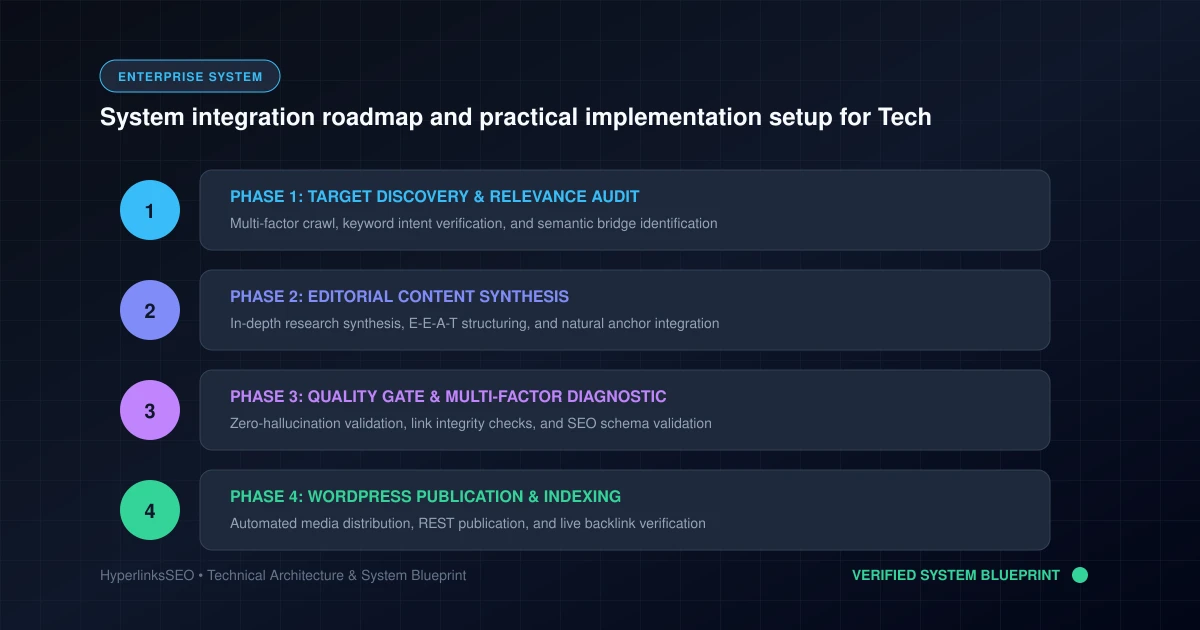
Security and compatibility begin with an accurate inventory. Record each device or equipment class, operating system or firmware version, network location, owner, supported protocols, authentication method, patch status, and end-of-support date. Do not assume that a device is safe merely because it is internal or because it has worked reliably in the past.
Use a compatibility matrix
Build a matrix that pairs every equipment type with the applications, network services, identity methods, and protocols it requires. Include minimum supported versions and a test result for each important combination. This creates a repeatable approval process when replacing equipment, changing firmware, introducing a new wireless configuration, or connecting an AI-enabled application.
Before production deployment, validate interoperability in a controlled environment that resembles the relevant production segment. Test normal operation, authentication failure, lost connectivity, certificate expiration, software rollback, and recovery from a failed update. Keep a documented fallback path for equipment that cannot be updated without affecting safety, service continuity, or vendor support.
Apply layered security controls
Use unique identities, strong authentication, least-privilege permissions, timely patching, encrypted administration channels, central logging, and tested backups. CISA’s Industrial Control Systems resources highlight the importance of addressing cyber risks in environments that connect operational technology and information technology.
Where equipment cannot support modern controls, compensate with isolation, strict allow rules, monitored jump hosts, dedicated administration procedures, and a replacement plan. Document compensating controls explicitly; otherwise, temporary exceptions tend to become invisible permanent exposure.
Network optimization practices that support AI workloads
Network optimization is not simply about increasing bandwidth. It means making critical traffic predictable, observable, and appropriately separated. Start by measuring current behavior: latency, jitter, packet loss, utilization, DNS performance, failed connections, retransmissions, and traffic patterns during peak operating periods. Establish these measurements before changing architecture so that improvements can be demonstrated.
- Segment by function and risk: Separate user devices, server workloads, management interfaces, guest access, development environments, and sensitive equipment where appropriate.
- Minimize permitted paths: Use explicit rules for required service-to-service communication rather than broad network access.
- Prioritize critical services: Identify traffic that has strict responsiveness needs and test quality-of-service settings under realistic load.
- Place data thoughtfully: Reduce unnecessary transfers by locating compute, storage, and frequently used data according to latency, cost, residency, and resilience requirements.
- Monitor continuously: Alert on unusual east-west traffic, failed authentication bursts, unexpected outbound destinations, and saturation trends.
- Test recovery: Confirm that network configuration backups, DNS dependencies, routing changes, and remote administration procedures can be restored safely.
The CISA Zero Trust Maturity Model 2.0 explains a security approach that focuses on continually evaluating access across identity, devices, networks, applications, and data. For a Blueprintly Tech initiative, this mindset supports decisions based on verified access needs rather than network location alone.
Operational scorecard for ongoing improvement
Use a compact scorecard reviewed by technical and business owners together. Track service availability, workflow completion time, exception rate, user acceptance, output-review findings, security incidents, unresolved vulnerabilities, change failure rate, and recovery-test results. Pair each metric with a target, owner, review cadence, and action threshold.
Finally, preserve traceability. Keep approved diagrams, architecture decisions, data-flow descriptions, test evidence, model or service configuration records, access reviews, and incident lessons in a controlled repository. Documentation makes future audits, maintenance, vendor changes, and expansion decisions substantially easier to manage.
Frequently asked questions
How should an organization evaluate and structure its Blueprintly Tech approach?
Begin with one owned business problem, create a map of systems and data flows, set measurable acceptance criteria, and deliver through controlled stages. Make security, user review, operational support, and rollback part of the initial design rather than post-launch tasks.
What are the most important success factors in 2026?
Clear ownership, fit-for-purpose data, realistic testing, secure integration, user adoption, measurable outcomes, and continuous monitoring are the central factors. A small, well-governed deployment that solves a defined problem is usually a stronger foundation than an unbounded programme.
How can equipment security and compatibility be assured?
Maintain a current asset inventory, use a compatibility matrix, test changes in a controlled environment, enforce least privilege, segment unsupported devices, patch where feasible, and retain documented rollback and recovery procedures.
What are the best practices for optimizing a network?
Measure baseline performance, segment traffic by purpose and risk, limit communication paths, prioritize critical traffic, monitor behavior continuously, and regularly test resilience. Treat network design as an operational control that supports reliability as well as cybersecurity.


